Earth-Based Telescope Captures Historic Image of Artemis II Crew Orbiting the Moon
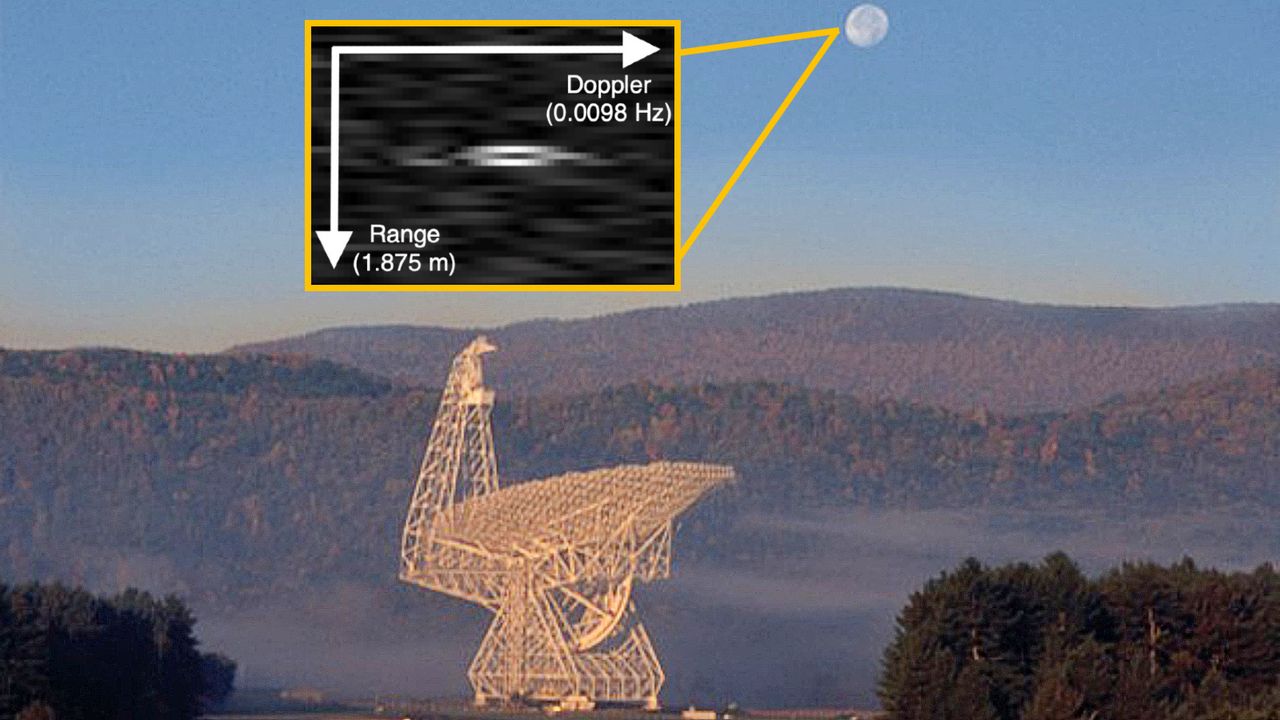
In a remarkable feat of astronomical photography, the Green Bank Telescope in West Virginia has captured an image showing the Artemis II mission's Orion capsule as it circles the moon at a distance of more than 200,000 miles from Earth. This blurry but groundbreaking photo could be the longest-distance image of humans ever taken from our planet, marking a new milestone in space exploration. Below, we explore the story behind this historic snapshot through a series of questions and detailed answers.
What makes this image so significant?
The image snapped by the Green Bank Telescope is notable for its extreme range. The Orion capsule, carrying the Artemis II crew, was over 200,000 miles away when the telescope recorded the blurry pixels. This likely makes it the longest-distance image of humans ever taken from Earth. Previous records involved astronauts on the International Space Station (only roughly 250 miles up) or the Apollo missions, but those were captured with different technology. Here, a ground-based radio observatory achieved the feat, demonstrating modern telescopes' ability to track and image spacecraft at lunar distances.
How did the Green Bank Telescope capture this image?
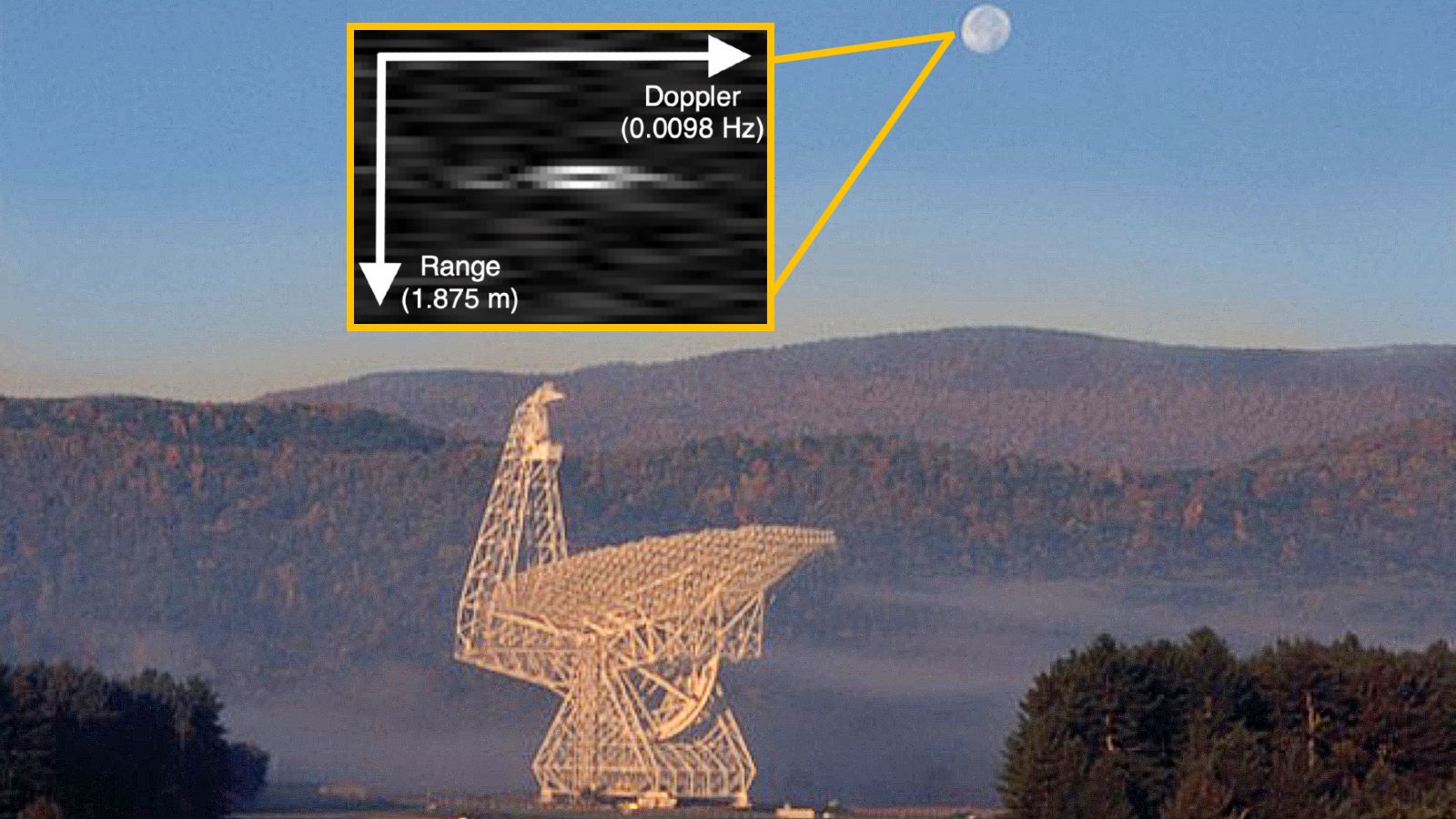
The Green Bank Telescope (GBT) is a massive fully steerable radio telescope, but it can also function as a radar telescope when combined with appropriate transmitters. For this observation, the GBT used its sensitive receivers to track the Orion capsule. Since the capsule is small and far away, it appears only as a few pixels—those pixels, however, represent the four astronauts inside. The telescope's dish, measuring 100 meters in diameter, collected faint radio reflections and signals from the spacecraft, which were then processed to create the image. The photo is intentionally compressed into a small size because of the extreme distance and the limited reflection of radar signals.
Who are the Artemis II crew members?
Artemis II is a crewed mission under NASA's Artemis program. The four-person crew includes Commander Reid Wiseman, Pilot Victor Glover, and Mission Specialists Christina Koch and Jeremy Hansen. They represent a diverse team drawn from NASA and the Canadian Space Agency. Their mission will orbit the moon aboard the Orion spacecraft, testing systems for future lunar landings. The image captured by the Green Bank Telescope shows their vehicle—meaning those pixels literally contain four human beings circling the moon. This moment underscores both the scientific and human significance of the mission.
Where is the Green Bank Telescope located?
The Green Bank Telescope is part of the National Radio Astronomy Observatory (NRAO) and is located in Green Bank, West Virginia, within the United States National Radio Quiet Zone. This location is shielded from human-made radio interference by law, making it one of the best sites on Earth for radio astronomy. Because the region limits cell phone towers, Wi-Fi, and other radio sources, the telescope can detect extremely faint signals from deep space. Its isolation allowed it to lock onto the Artemis II capsule without overwhelming noise, making this historic image possible.
Could this image actually be the longest-distance photo of humans ever taken?
According to astronomers, the answer is almost certainly yes. The Apollo missions from the 1960s and 1970s captured iconic photos of astronauts on the lunar surface, but those were taken at the moon by the astronauts themselves or by robotic cameras. The new image, however, was taken from Earth—over 200,000 miles away—showing the Orion capsule with its crew. No previous Earth-based telescope had succeeded in resolving humans or a human-occupied spacecraft at such a distance. The only potential contenders are deep-space probes carrying humans, but no such mission has launched beyond the moon. Therefore, the Green Bank photo likely stands as the current record holder.
What technologies were involved to capture this distant image?
Several advanced technologies came together. The Green Bank Telescope itself uses a massive parabolic dish to collect radio waves. For this observation, the telescope operated in radar imaging mode: it transmitted a powerful radar pulse toward the moon region where the Orion capsule was expected. The pulse reflects off the spacecraft and returns to the telescope. The received signal is extremely weak because of the distance—consider that light speed takes about 1.3 seconds to travel to the moon and back. Digital signal processing then amplifies and compiles the reflections into a few-pixel image. The entire process requires precise tracking algorithms to follow the capsule's orbit, which moves at nearly 3,500 km/h relative to Earth. Without this blend of mechanical and computational engineering, the image would be impossible.
What does this image mean for future space missions?
The image demonstrates that Earth-based telescopes can provide independent visual confirmation of crewed spacecraft in deep space. This could be valuable for future missions to the moon, Mars, or asteroids, offering a backup method for tracking assets far from Earth. Moreover, the success encourages the development of more powerful radar telescopes that could image spacecraft in greater detail. For the Artemis program itself, the image offers a tangible link between Earth and the crew, reminding the public that astronauts are orbiting only a few pixels away—yet hundreds of thousands of miles distant. It also validates the Green Bank Telescope's versatility beyond pure astronomy, opening new possibilities for planetary defense, space traffic management, and public engagement.